On 29 October 2026, Elitez Group and Latura held Transforming FM: From Contracts to Outcomes at the Lifelong Learning Institute, with support from the Skills and Workforce Development Agency (SWDA). The half-day masterclass was planned for service buyers, managing agents and facilities management companies. It dealt with the shift from contracts that specify headcount to contracts that pay for results, and with what technology and AI contribute to that shift.
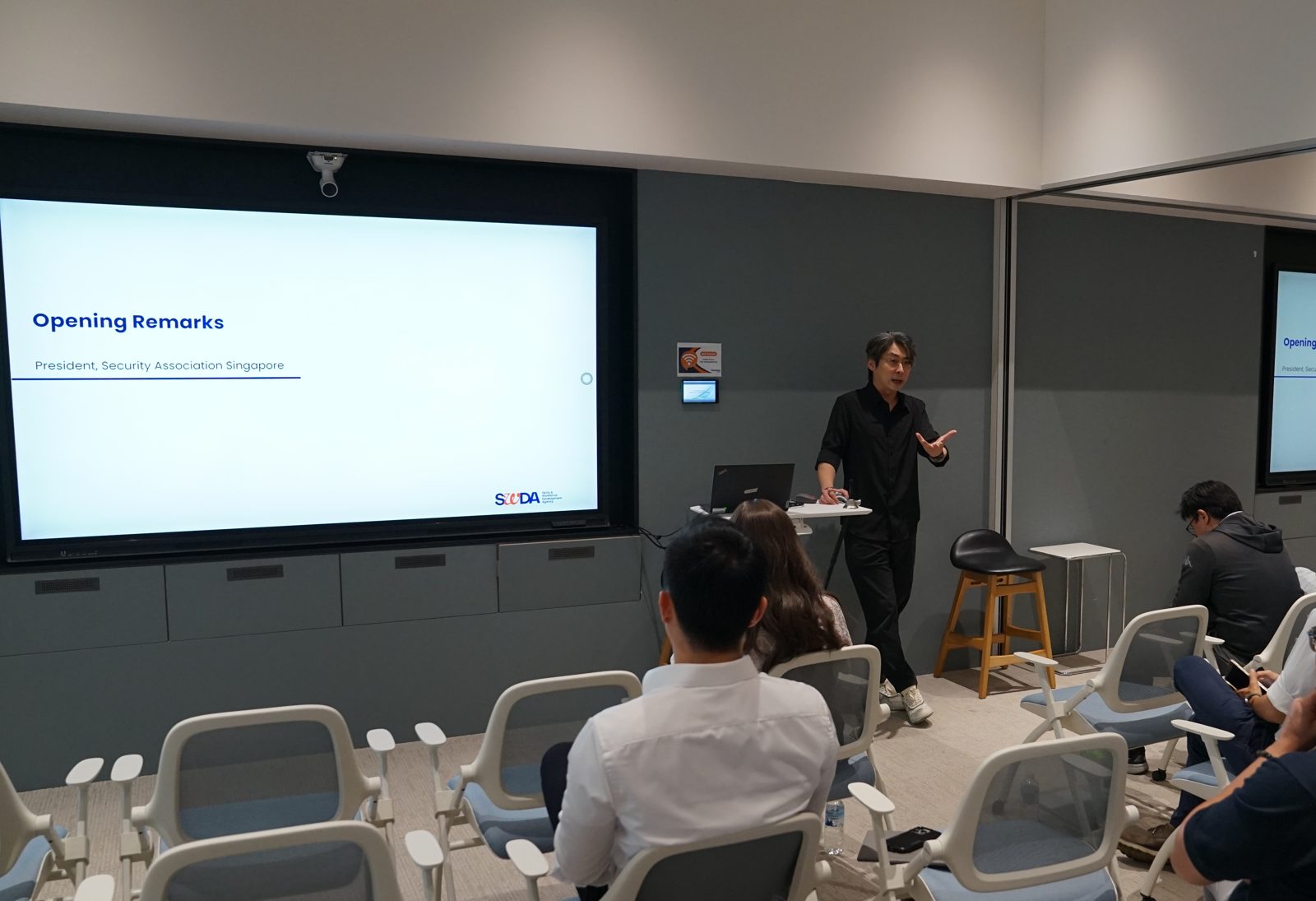
Kelvin Goh, President of the Security Association Singapore (SAS), opened the afternoon. Jourdan Sabapathy of Avantech spoke next, on designing outcome-based contracts. Jonathan Koh of the Singapore International Facility Management Association (SIFMA) gave the facilities-management view, and Jeran Singh described how Bulls-Eye Security Services had made its own transition. SWDA and AETOS each took a short segment, on workforce funding and on support for security agencies moving into facilities work. Kayne Lim of Latura then spoke on practical uses of AI for service buyers, and Derrick Teo of Elitez closed the talks with integrated, technology-enabled FM. A panel and audience questions ended the programme, and networking followed.
This recap begins with Latura’s presentation and then follows the rest of the programme in order.
Latura · AI for service buyers
Kayne Lim: driving the change from the buyer’s side
Kayne opened by asking who in the room bought facilities services and who provided them. Most of the audience were providers. He said he would speak mainly to the buyers anyway, since they hold the budget that decides what providers are paid to improve. Throughout, he came back to what a buyer should now expect from a service, and how they would know if they were getting it.
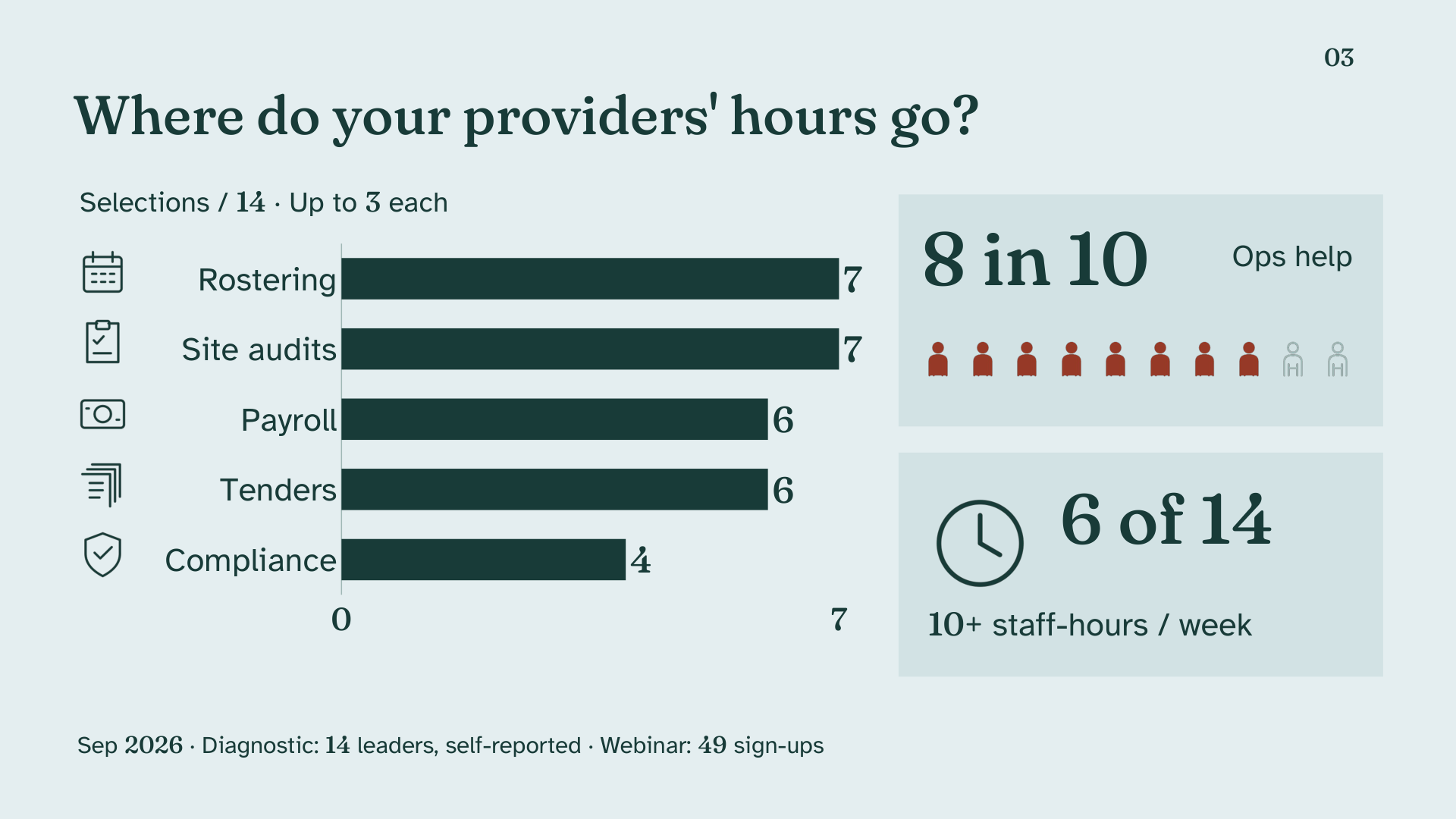
His first data came from Latura’s September work with the security industry. Eight in ten of the 49 people who signed up for the September webinar had asked for help with security operations. Fourteen security leaders completed a separate diagnostic. Rostering and site audits were each named seven times as the tasks that took the most staff time, and six of the fourteen put their priority task at more than ten staff-hours a week. Kayne suggested the picture in cleaning or M&E was unlikely to be very different.
He went on to describe how a buyer could test whether a change worked. The buyer names the pain point, sets a measurable target and records today’s baseline, then runs a small trial and decides whether to continue, change or stop. His example was a monthly service report, where the time taken to prepare it and how complete it was could both be measured before any tool came in.
Training was the next theme. Kayne pointed out that a capable product did not make a team capable with AI. The September diagnostic had been meant for senior leaders only, yet twenty-five staff from fifteen companies tried to take it anyway, almost twice the number of leaders who completed it. He read that as a sign that the people doing the administrative work wanted to learn. He also separated what frontline staff needed, which was the basics such as uploading photos, from what back-office staff and managers needed, since they choose the software and use it most.
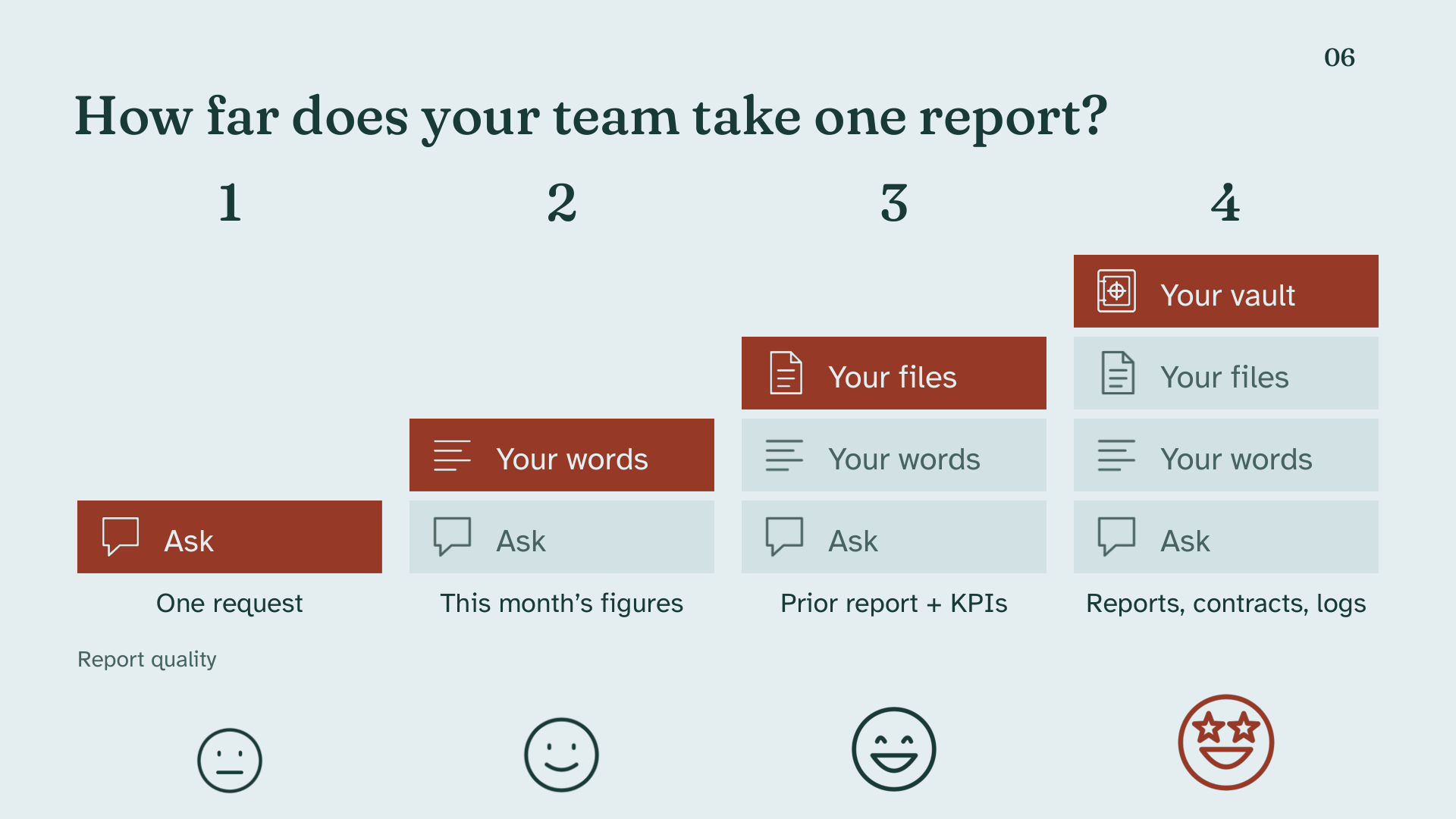
The same monthly service report showed four levels of use. At the first, someone asks AI to write the report with nothing to go on. At the second, they add this month’s figures and what the report has to say. At the third, they attach files such as last month’s report and the contract KPIs. At the fourth, the AI draws on a whole library of reports, contracts and logs, and the figures come from the organisation’s own records. Most teams, Kayne said, stopped at the first level.
Some work, he said, AI could already do on a phone or laptop using information providers already hold. It could turn an officer’s voice note and photos into an incident report, flag clashes and uncovered shifts in a roster, and draft a monthly report from patrol and job logs. AI tools changed every few months, so he suggested buyers should expect the service they paid for to improve over the contract term. He also asked why most buyers still could not see all their agencies in one dashboard.
Haze Island
The second half of the talk was a case study of his own. Kayne showed a 24-hour PSI reading of 185 and pointed to two problems. The figure lagged behind the air at that moment, and it told no one what to do. His answer was Haze Island, a small tool on Latura’s site that shows hourly air-quality readings by region and labels severity in words. The island’s residents are shown putting on masks when the air turns bad. By the time of the talk it had at least 124 visits from people who had opted in to analytics. The most common reaction was that it beat the official version, and some people simply called it cute. He built it himself with AI tools, without a developer.
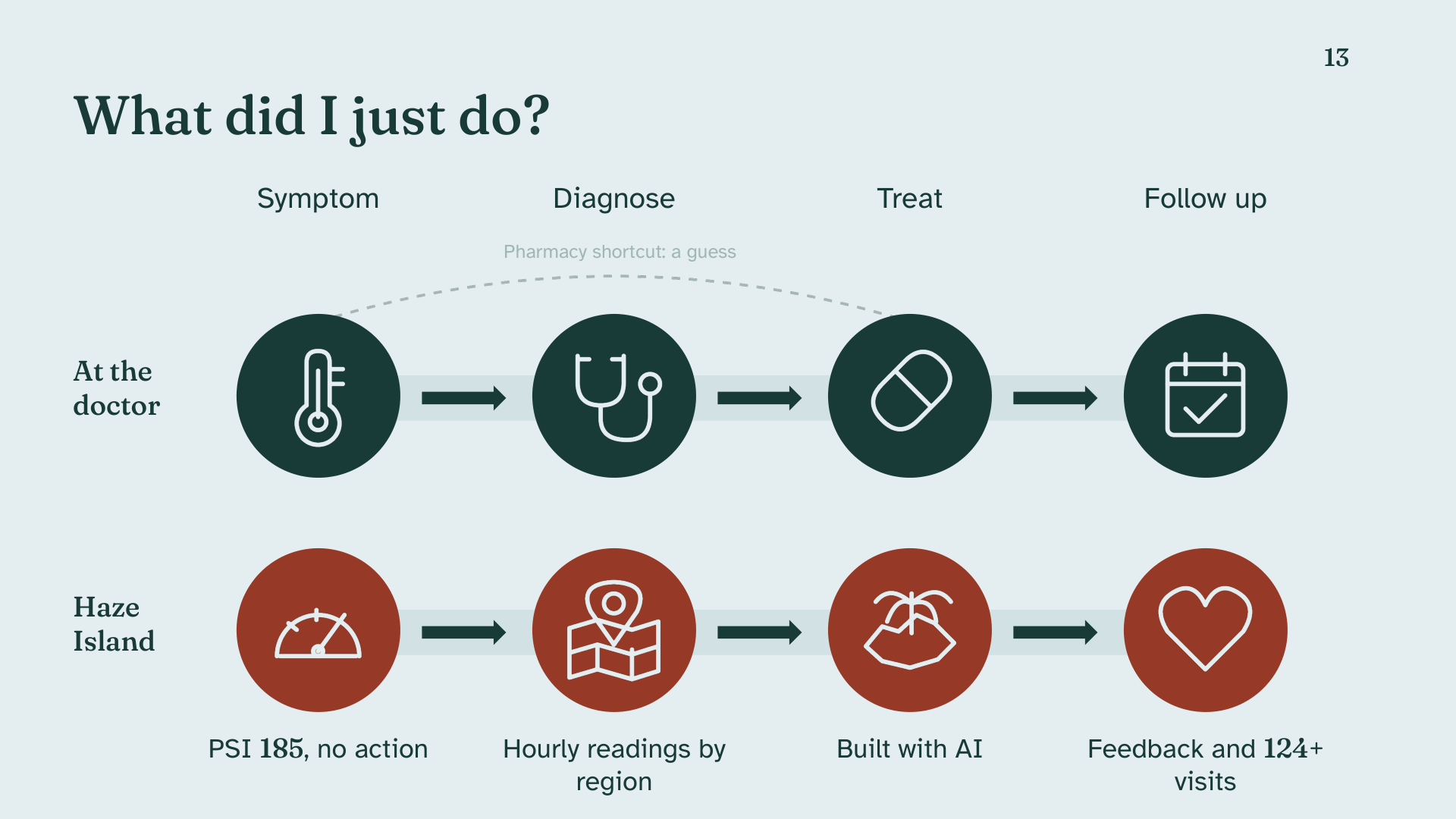
He likened the process to a visit to a good doctor: a symptom, a diagnosis with the right tests, a treatment, and a follow-up to check it worked. Going straight to the pharmacy is sometimes enough, he said, but without the diagnosis no one knows whether it is the right medicine, and much AI buying looks like that today. Businesses usually buy three things separately: working out the problem, building or sourcing the fix, and training the people who run it. Latura’s work puts them together. He mentioned a current project with a security agency, an AI tool that helps its HR team crew officers for large events.
Funding and the front door
Kayne ended on funding. Support for training and technology adoption sits across many portals with their own rules, and the rules change: from 30 September 2026, several of the main business grants were replaced by the EDGE Grant. Much of this support has to be applied for before a project is signed or started. Latura’s response is a guided tool that starts from the problem a business wants to solve and points to the support that fits. It opens on Friday 30 October at 4 pm, with a one-on-one walkthrough for the first ten people to sign up.
His last line went back to the opening question. AI tools for the industry, he said, only matter if service buyers move too.
Avantech · Designing outcome-based contracts
Jourdan Sabapathy: bring in the consultant before the tender
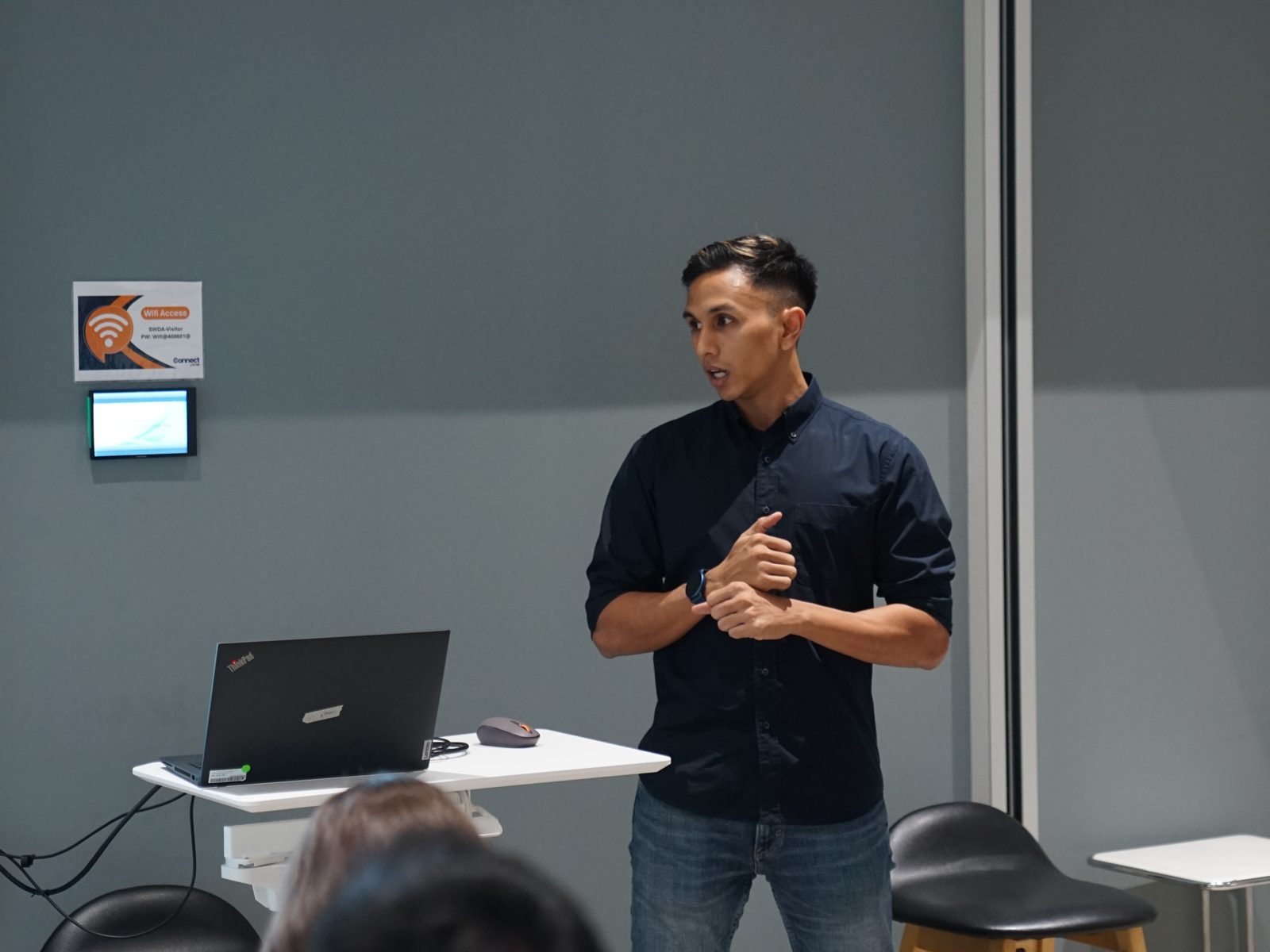
Jourdan, a principal consultant at Avantech and a vice-president of SAS, gave the first talk of the afternoon. He started with the buyer’s tender and argued that buyers should engage a security consultant before going to tender. The consultant would assess the site, set its requirements, and design a KPI matrix and liquidated-damages terms that measure results. He gave two cases. A residential site had replaced liquidated-damages clauses with a KPI matrix, and an industrial site had reduced its manpower once suitable technology was in place.
The rest of his talk set out a hybrid model in which technology supports officers instead of replacing them: licence plate recognition, remote monitoring, remote access control, visitor management and video analytics. Officers trained on these tools could spend more time on higher-priority work and run less risk of burnout. He took up buyers’ usual worries about cost, trust and implementation, and described security technology as an investment in protecting assets, staff and reputation. He encouraged agencies to work with technology providers on solutions built for each site. With manpower short and Progressive Wage Model (PWM) costs rising, he said the industry needed to look ahead. His point about prescribed headcount came back in the panel: if a tender still fixes the number of officers, the buyer is buying manpower, not an outcome.
SIFMA · The facilities-management view
Jonathan Koh: what buyers should measure and reward
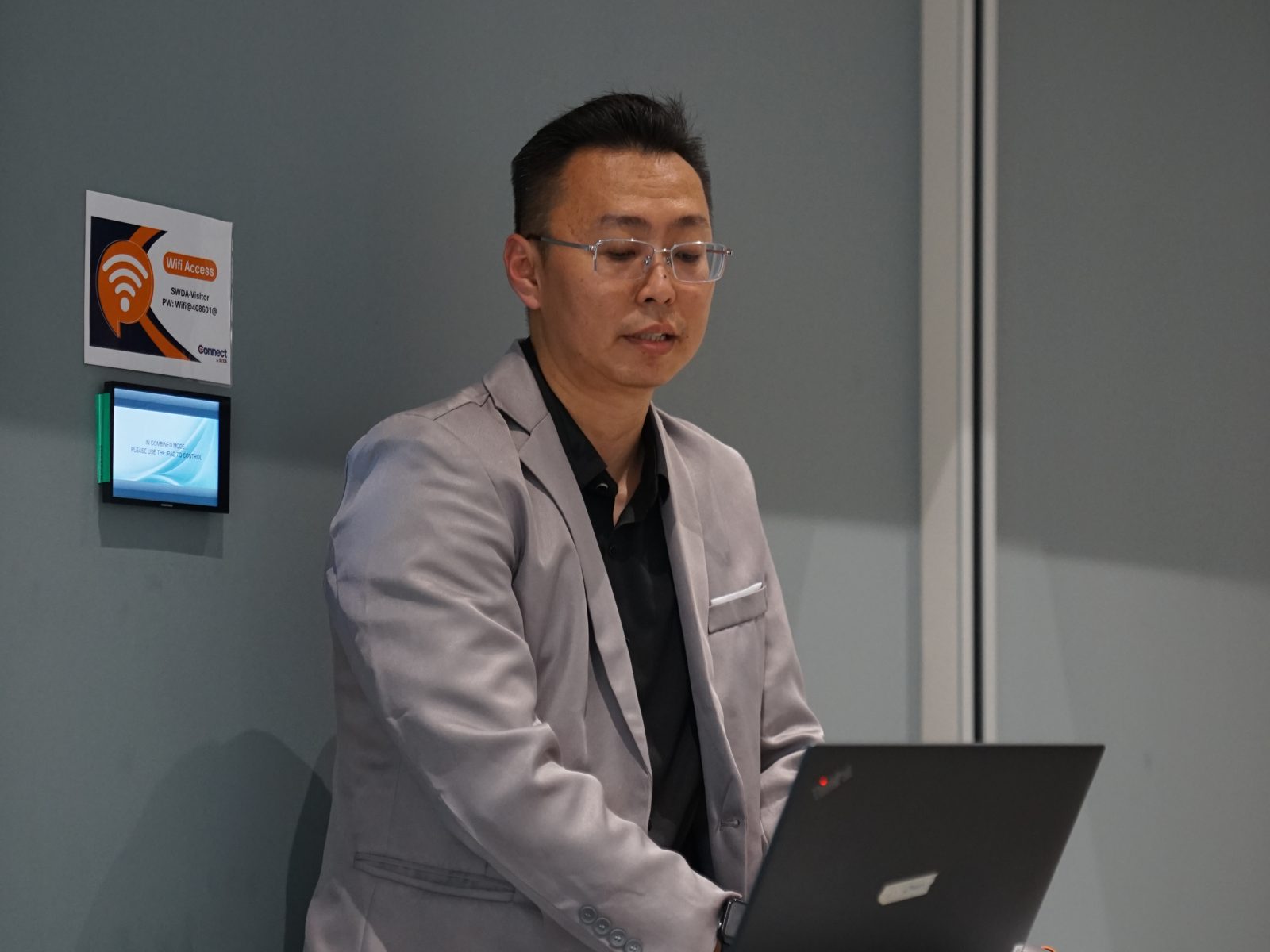
Jonathan, who sits on SIFMA’s Strategic Partnerships Committee, began with wages. Under the PWM, a security officer’s basic wage more than triples between 2016 and 2028, and a cleaner’s more than doubles. He argued that rising labour costs make the move from headcount contracts to outcome-based ones, supported by technology, hard to avoid.
On procurement, he showed a scoring method that weighted technology solutions as heavily as price, under which the lowest-priced bid in his example ranked last. He also described a guarding contract that moved to an outcome-based model with video analytics and virtual patrols, needing four fewer officers and lowering the contract sum by 6%. Success, he said, depended on every party, because an outcome-based contract fails when only one side embraces the change.
Bulls-Eye Security Services · From headcount to outcomes
Jeran Singh: one company’s transition
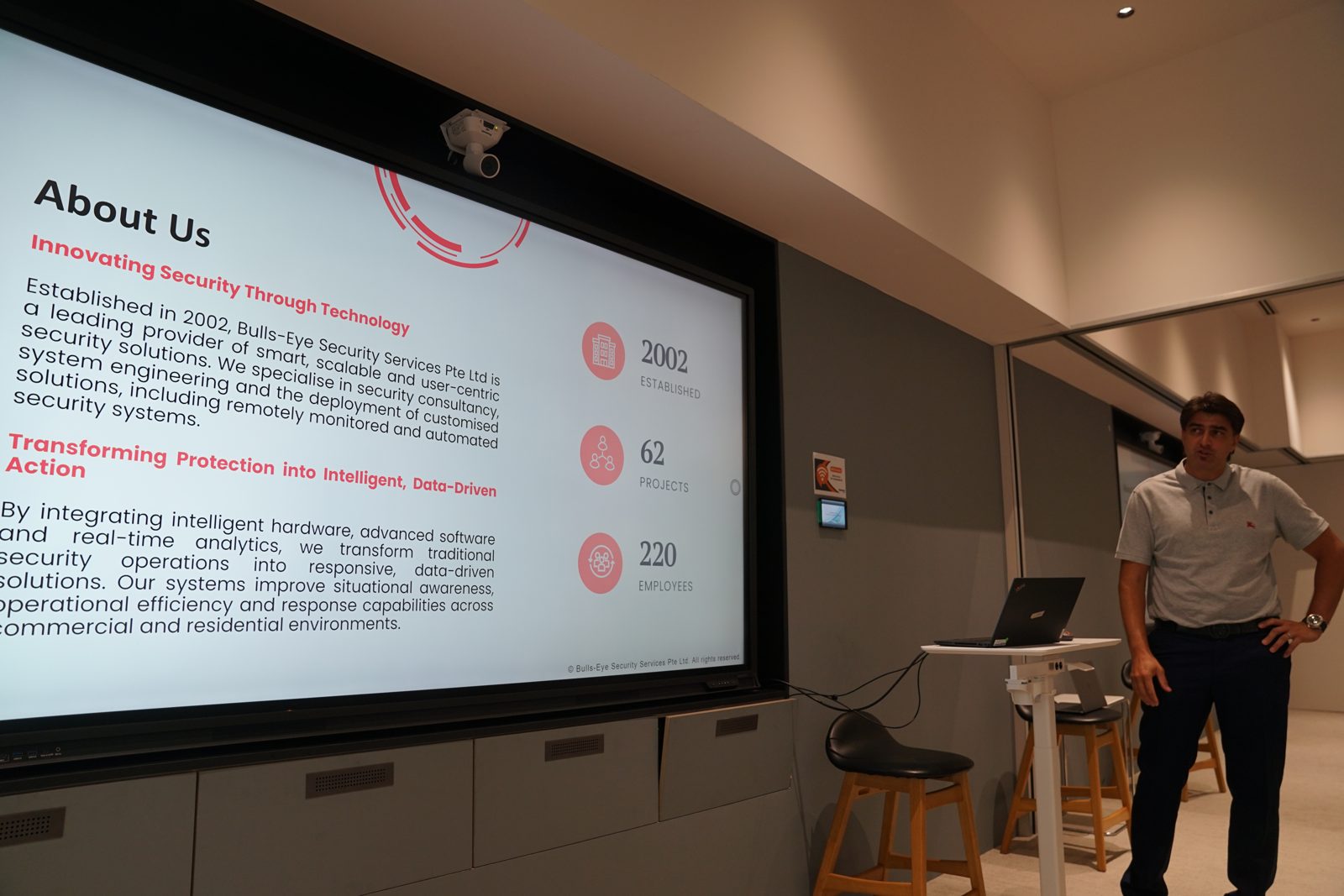
Jeran spoke as a business owner. Ten years ago the industry had too few officers, most of them aged 55 and above, and the job was seen as low-paid with little progression. Bulls-Eye answered by changing how it operated. In 2018 it invested more than $700,000 in its first command centre, with support from e2i’s Inclusive Growth Programme and the Job Redesign Programme, and in 2022 it opened a larger 1,300 sq ft centre. For each outcome-based tender the company now works through four steps: understanding the client’s outcomes, designing a concept of operations, implementing it, and supporting the service afterwards.
Many of the changes he described came from redesigning the officer’s job. Nearby sites share manpower under one command centre, and roving officers respond to incidents. An AI virtual patrol reviews camera feeds on a schedule and passes only the irregularities to an officer, which cut a 50-minute patrol to five minutes. Two projects won the Outcome Based Deal of the Year at the Singapore Security Industry Awards. The Visionaire, an executive condominium where officers now open function rooms remotely after checking residents by video intercom, won in 2022. The Kuehne+Nagel Singapore Logistics Hub, where paper gate passes gave way to a system using number-plate recognition, facial recognition and document scanning, won in 2024.
He was candid about what had not gone well. Automation moved some work onto other people, because with self-registration visitors and warehouse staff did tasks officers used to do. Some problems only surfaced during rollout. Residents with Huawei phones could not download an access app from Google Play, and some elderly residents needed repeated one-to-one sessions. His lessons were to manage expectations, brief people before a change arrives, and keep training staff and management, since the shift now was from software to AI.
SWDA · Workforce support
Hariz Azhar: funding the redesign
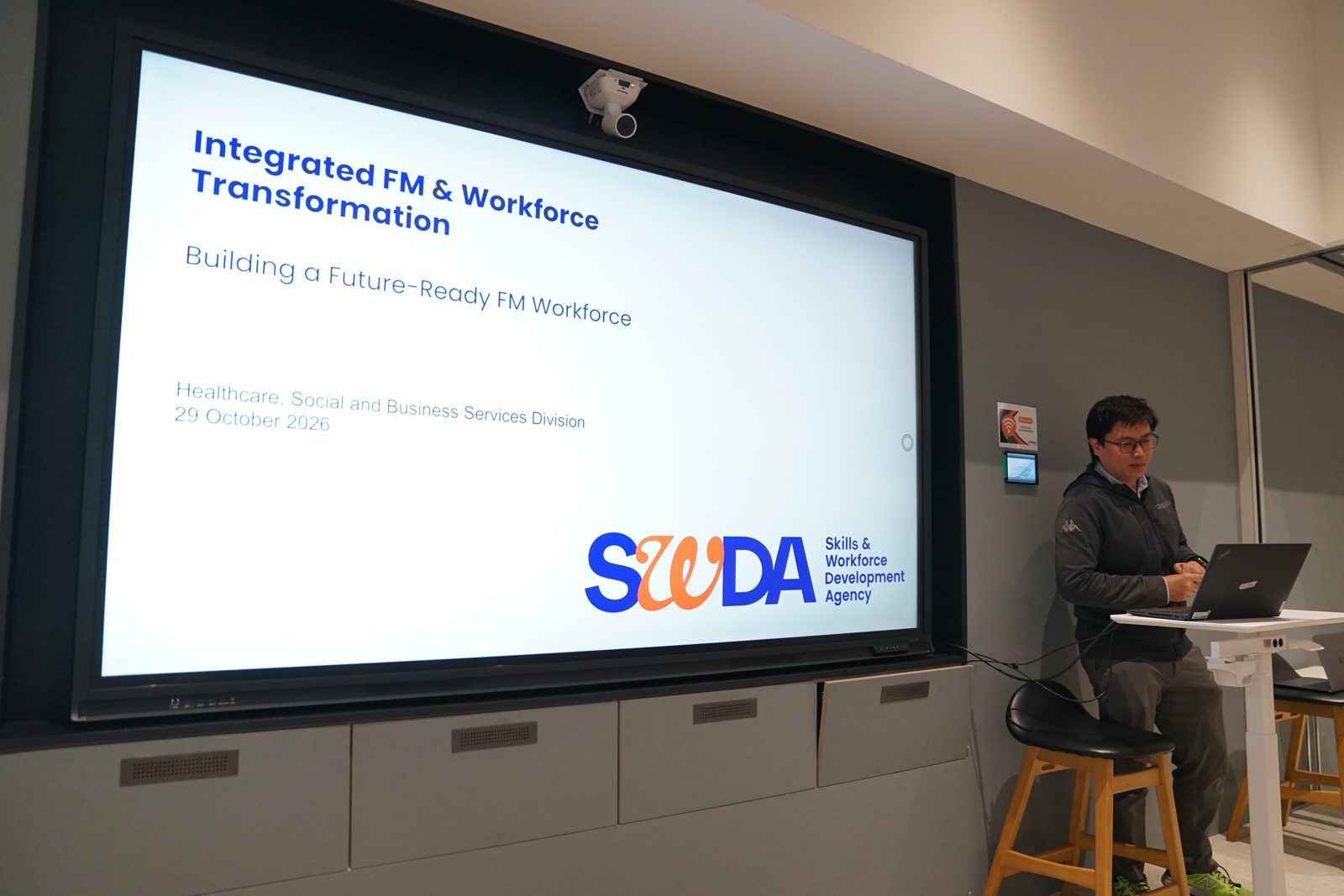
Hariz, who was also the afternoon’s host, outlined how SWDA’s support fits the stages of a transformation. The Enterprise Workforce Transformation Package runs from recognising the need for change through to redesigning jobs and building skills. Within it, the Job Redesign Plus grant has three parts: workforce consultancy with a pre-approved consultant, capability building for managers and HR, and workforce technology solutions, which are available only alongside one of the first two. Twenty-six consultants are pre-approved.
He then turned to the Career Conversion Programme, which supports both new hires and existing staff taking on redesigned roles. The version for security officers adds new functions to existing officers’ jobs through structured on-the-job training, and a facilities-management track supports people moving into FM roles. He summed up the sequence as diagnose and plan, redesign, then reskill.
AETOS · Support for security agencies
One workflow at a time
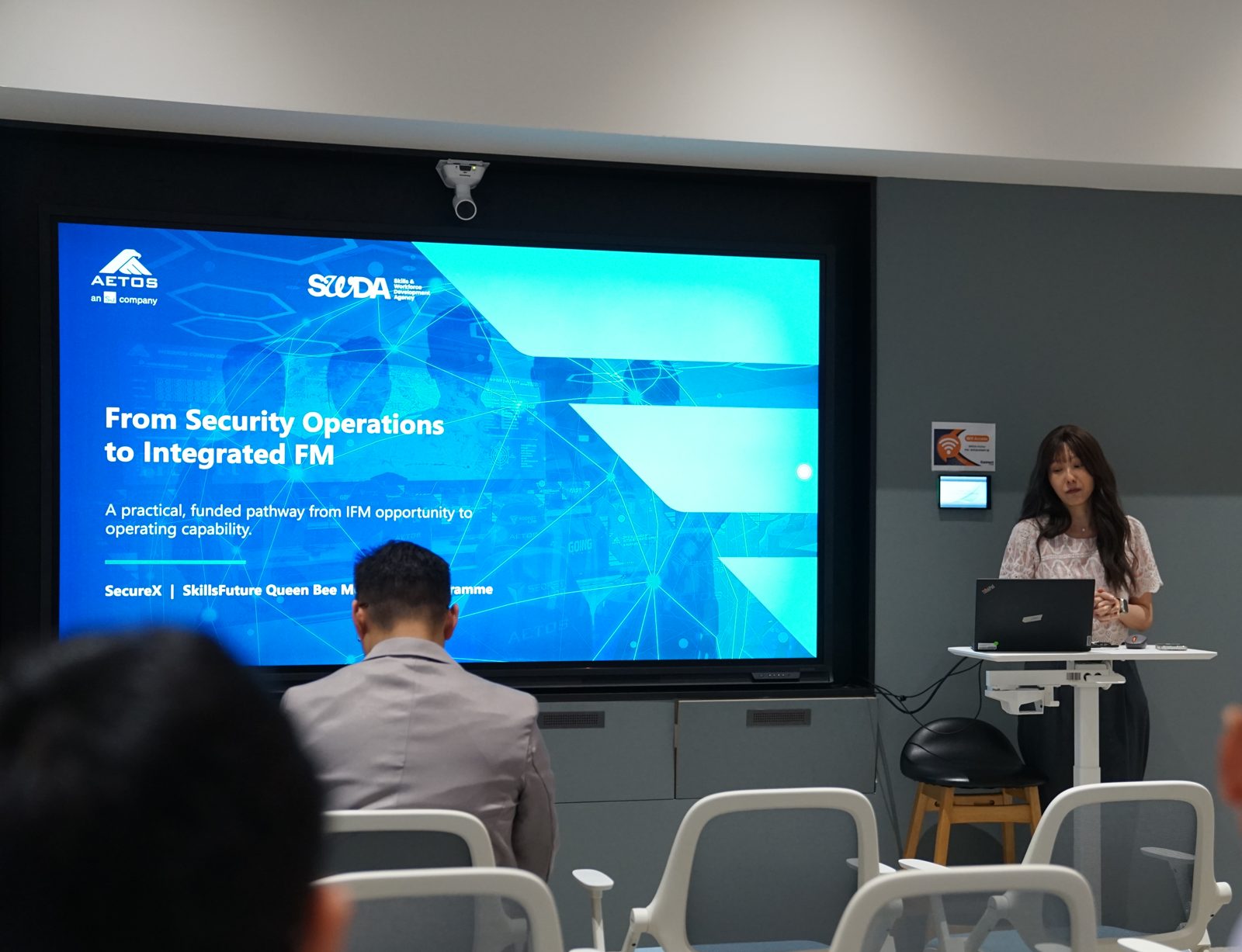
The AETOS speaker leads its SkillsFuture Queen Bee programme, which helps security agencies close capability gaps and transform digitally. Agencies, the speaker argued, already understand sites, incidents, deployment and clients, and that gives them a credible route into facilities work. The condition was that they connect security with wider site operations and measurable outcomes instead of simply adding FM tasks to officers.
The common obstacles, the speaker said, were manual operations, separate security and facilities workloads, workflows not ready to be connected, and uncertainty about which technology to adopt first. The advice was against transforming too much at once. The speaker’s advice was to begin with one workflow that matters to the client, such as a combined patrol and facilities inspection, and map who receives an alert, who acts, what evidence is captured and how success is measured. A proof of concept, the speaker said, is only the first step. Keeping it going depends on procedures, workforce development and working with the vendor over time.
Elitez · Integrated, technology-enabled FM
Derrick Teo: leadership, and who keeps the gains
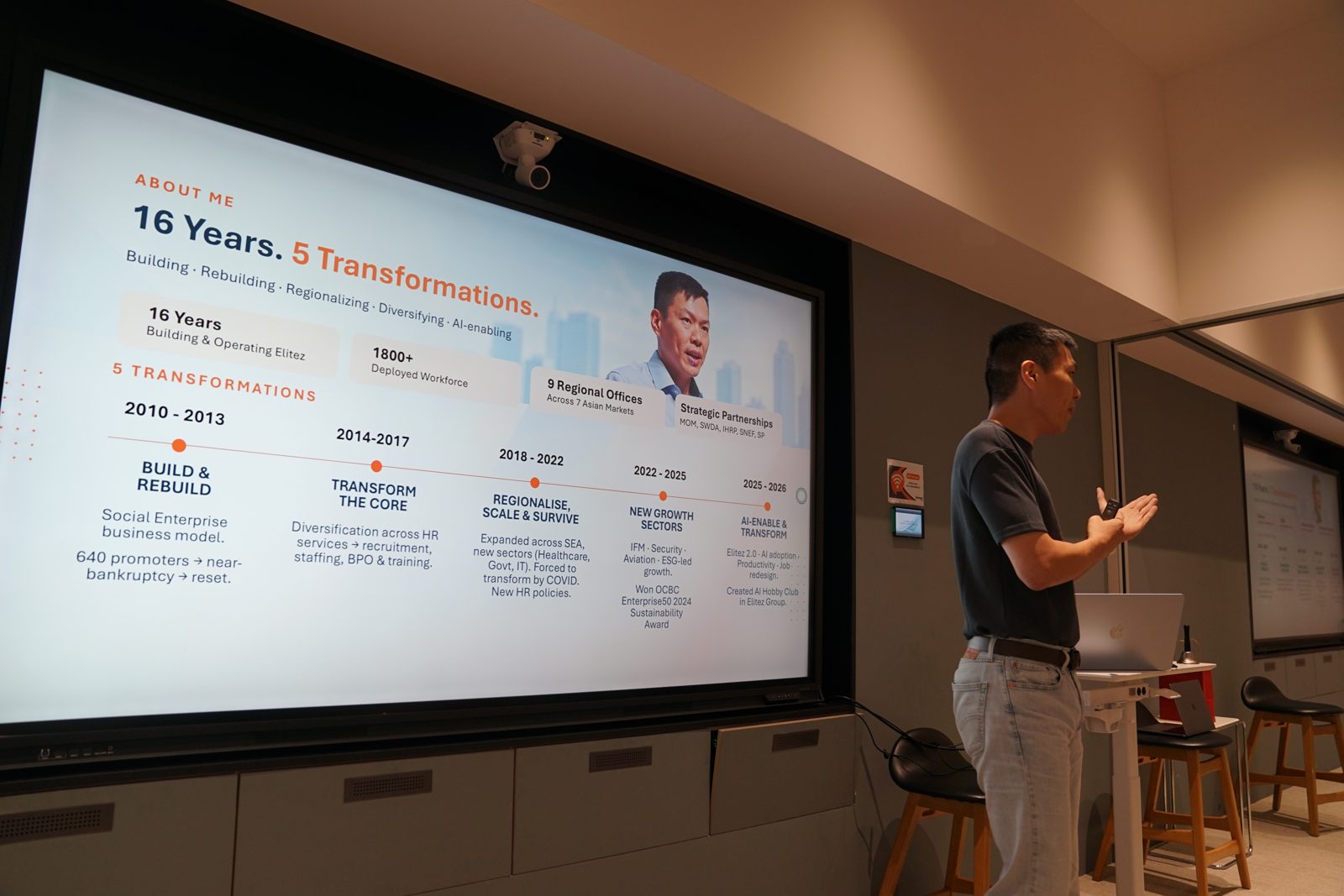
Derrick, Elitez’s founder and CEO, described a company that has changed its business model at least five times in sixteen years, mostly because the market forced it to. Every one of those changes, he said, came down to leadership and people. Its AI effort began with a mistake. He handed it to two leaders with a budget to hire developers, and progress stalled. The turning point came after he announced an AI push at a town hall and realised he lacked the vocabulary himself. He started learning and set up a volunteer AI club, and Elitez now expects staff to build tools and workflows, not only write prompts. He showed two internal tools. One was a manpower dashboard where photo captions are written automatically, which he said saved about three hours of reporting per site. The other was a learning system that generates quizzes from documents against SWDA’s skills frameworks. Attendees were offered free accounts.
His most distinctive argument concerned who keeps the value AI creates. Without a plan, the gains go to employees whose work becomes easier, while the company’s costs rise with new infrastructure. If the owner keeps everything, margins rise briefly until overworked staff leave. Derrick argued for sharing the gains through pay, bonuses or flexible work, and applied the same logic to buyers and providers. A contract, in his view, is a repeated game: a buyer who squeezes a provider this year will face higher prices or fewer bidders next year.
He also argued that AI-fluency training should not come first. A business should identify the outcome it wants and where the value will be captured, then deploy the workflow, and only then train for fluency. He closed by adapting a line attributed to John Dewey on teaching with yesterday’s methods and applying it to how services are bought. A buyer still purchasing the way it did yesterday will get yesterday’s providers.
Panel discussion and audience questions
Outcome-based in name, or in practice?
Jeran, Derrick, Jourdan, Jonathan and Kayne returned for a panel moderated by Hariz, with questions drawn from registrations and the audience. Asked how well buyers understood outcome-based contracting, Jeran said it remained unclear to buyers and providers alike. Tenders labelled outcome-based still listed headcount, and a short site visit left too little time to design a proper proposal. Jourdan held that a contract prescribing manpower could not be outcome-based, and a panellist added that providers were sometimes penalised for missing headcount even when the outcome was met.
On moving from inputs to outcomes, Derrick compared buyers to parents choosing a childcare centre, who now look at what their child learns and eats instead of the ratio of teachers to children. On price, he argued for transparent scoring and for telling losing bidders why they lost. Jonathan asked whether a buyer was paying for someone to be present or for a service, and described disputes over payment that turned on a score of 95% against 94%. Kayne’s answer on technology was to know the outcome, measure first, and have someone who understands the tools check where they could go wrong.
An audience question on protecting company data when staff use AI drew an honest answer from Derrick, who said there was no good answer yet. Elitez keeps sensitive work on its own local AI server and uses frontier models for everything else. Kayne added that small open models running on a single machine had become capable enough for much everyday work. Hariz closed with three takeaways: the outcome comes before manpower or technology, technology adoption goes hand in hand with job redesign, and companies do not have to make the change alone, with industry partners, providers and SWDA there to help.
Across the afternoon
What connected the talks
The clearest thread was the gap between the term and the practice. Jeran, Jourdan and Jonathan each described tenders that were called outcome-based but still specified the number of officers or cleaners. Their remedies differed. Jourdan placed it in the design of the tender, with a consultant and a KPI matrix. For Jonathan it was in how bids are scored, with technology weighted equally with price. Jeran looked to the conversations with the client about what they wanted from the site.
Most speakers also began with the outcome and a single piece of work. Jeran’s four steps started with the client’s outcomes, and the AETOS speaker recommended one workflow. Derrick put outcomes ahead of AI training, and Kayne’s trial framework and his Haze Island case both started by naming the problem before the tool. The host’s first takeaway said the same.
The most open question was how the gains are shared. Derrick framed it inside a company and between buyers and providers. Jonathan’s scoring model and the falling contract sum in his guarding case showed one way buyers can see part of the saving. Kayne’s argument ran alongside: buyers who know what is possible are in a position to ask for it.